Fabric
Natural and synthetics fabrics. From Merino Wool and Foxfibre to Goretex and RPET
- 19 Nov 2025
- ⌘
- 5 min read
Table Contents
[ Blog Under Construction … ]
This is blog with TANUKI and LABEL are part of the trilogy of my textile notes.
More focusing on materials, quality, dyeing, and construction methods. Leaning towards brands that take quality as a top priority, instead of the brands that like to show off their logo. We are going to read and discover about merino wool, selvedge denim, and more niche materials like Supima® Cotton, Foxfibre® and Westex Indura. Do you want to know about undyed and unbleached clothing and natural dyes like the purple-blue indigo or why GSM matters?
In this first part, it is about fabrics. The core of a garment is its material, and the first thing is processed.
1. Natural
Wool

Wool is naturally flame-retardant, wind-resistant, and water-resistant. It is really tough.
There are many variants of wool. You may find merino wool, which is made from the fleece of merino sheep, originating from the Iberian Peninsula, known for its softness and warmth, and usually is warmer than regular wool.
There is also cashmere, which is a soft, fine wool from the cashmere goat. Mongolia is well-known for its high-quality cashmere.
Mackinaw cloth and Melton are a heavy, high-density, and water-repellent woolen fabric. Originally worn in harsh cold weather by Canadian and American loggers. The Mackinaw region was located in Michigan and was a crucial trade region. Later, it was used by the US Army, the Beach Boys, and hippies.
Alpaca
[…]
Yak
There are some brands that are specialized in wool like Icebreaker, Smartwool. Made in the USA Duckworth. Aclima from Norway, which also made equipment for the Norwegian army, Woolpower from and made in Sweden. For good quality, priced technical wool, you may take a look at Decathlon, featuring 89% merino wool t-shirt for $55 and 100% merino wool beanie for $25.
Cotton

Cotton is the most widespread natural material around the world. But there are different qualities from its material to how dense and thick it is woven, and how it is processed, even the dyeing and bleaching may affect its quality.
From the cotton source point of view, there are short and long staple, usually there is a consensus that long staple are superior in quality and last longer. One of those long staple cottons is called Supima Cotton which is made from an extra-long staple (ELS), which is longer and finer than regular cotton, it is grown exclusively in the USA and is considered one of the highest quality cottons in the world. Usually are in t-shirts higher than 50 or 100 bucks, although Uniqlo has a SUPIMA T-shirt for only $25.
Origin
Some high-quality cotton grown worldwide:
- Californian Cotton: Primarily grows Pima cotton, which is a long-staple cotton.
- Texas Cotton: It produces 40% of the US cotton, thanks to its hot days with cold nights.
- Zimbabwean Cotton: It is claimed as a high-quality cotton, characterised mainly by medium to long staple fibres. Because of a lack of modern technology, it is said that they use more eco-friendly cultivation methods. Widely used on Momotaro Jeans.
- Samurai Jeans Cotton: The Samurai Jeans company wants to grow its own cotton in Japan, a country that didn’t have native cotton species. […]
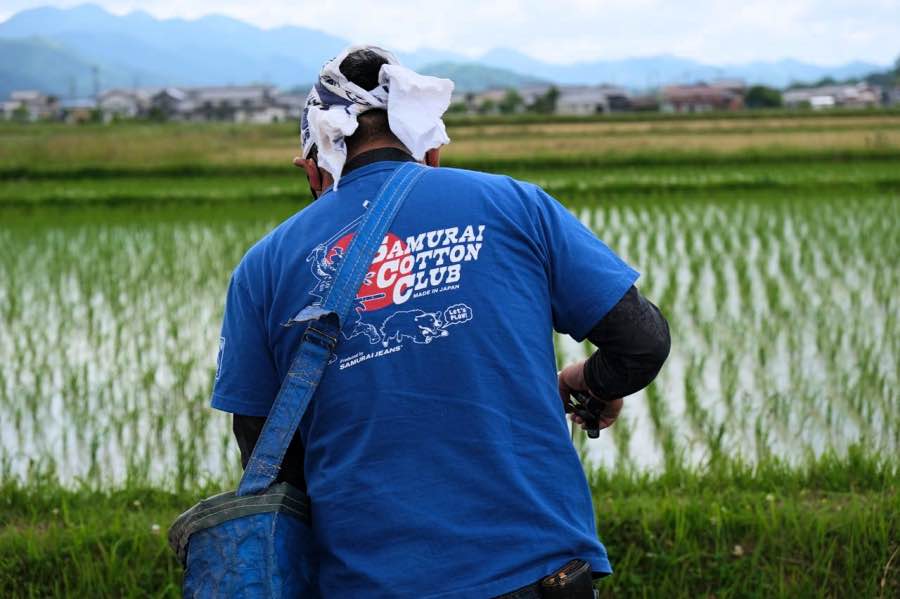

Samurai Cotton farm and Tee
- Sea Island Cotton: It is said to be the most luxurious cotton in the world. Reaching up to 50mm, it has the longest staple length of all cotton types – 50% longer than standard extra-long staple cotton – creating softer, more durable fabrics that are so smooth Queen Victoria mistook them for silk. It has been used to make the Sea Island Selvedge jeans by Naked and Famous and is available in some T-shirts from Sunspel.


Naked & Famous Sea Island Selvedge and Sunspel Sea Island Tee
- Giza 45: Giza 45 is the oldest Giza Cotton variety still grown in Egypt (more than 65 years) and the most precious and famous all over the world. The origin of Giza 45 can be traced back to the need to produce varieties of top quality that could withstand the expected competition of Sea Island cotton.
Down
Usually used in combination with an outer fabric that wraps it. Its low density makes it lightweight and easily packable. Higher fill power (more than 800), measured in cubic inches, indicates the volume one ounce of down occupies, and the more insulation you get in that garment. Goose down typically offers higher fill power and loft than duck down.
The downside is that it gets compressed when wet and then loses its warmth, although nowadays it can be coated with a water-repellent layer. You cannot make a garment 100% down.
Corduroy is a durable, ridged textile made primarily from cotton or cotton blends, featuring vertical “wales” (raised cords) created through a cut-pile weaving technique.
Rayon
[…]
Linen
Date back to more than 10,000 years, with some sources even pointing to 36,000 thousand years. Linen is usually linked to ancient Egypt, in which it was widely spread among the population and it was used to wrap up the mommies.

Linen is made of natural textile from the flax plant. It is hypoallergenic and antibacterial. Thanks to its structure, it can regulate temperature. The bad news is that linen wrinkles easily compared to other materials. According to Asket: “Linen is dry, lightweight, breathable, and fast-drying, making it ideal for summer garments.” Linen also requires specialized expertise during its production.
Silk
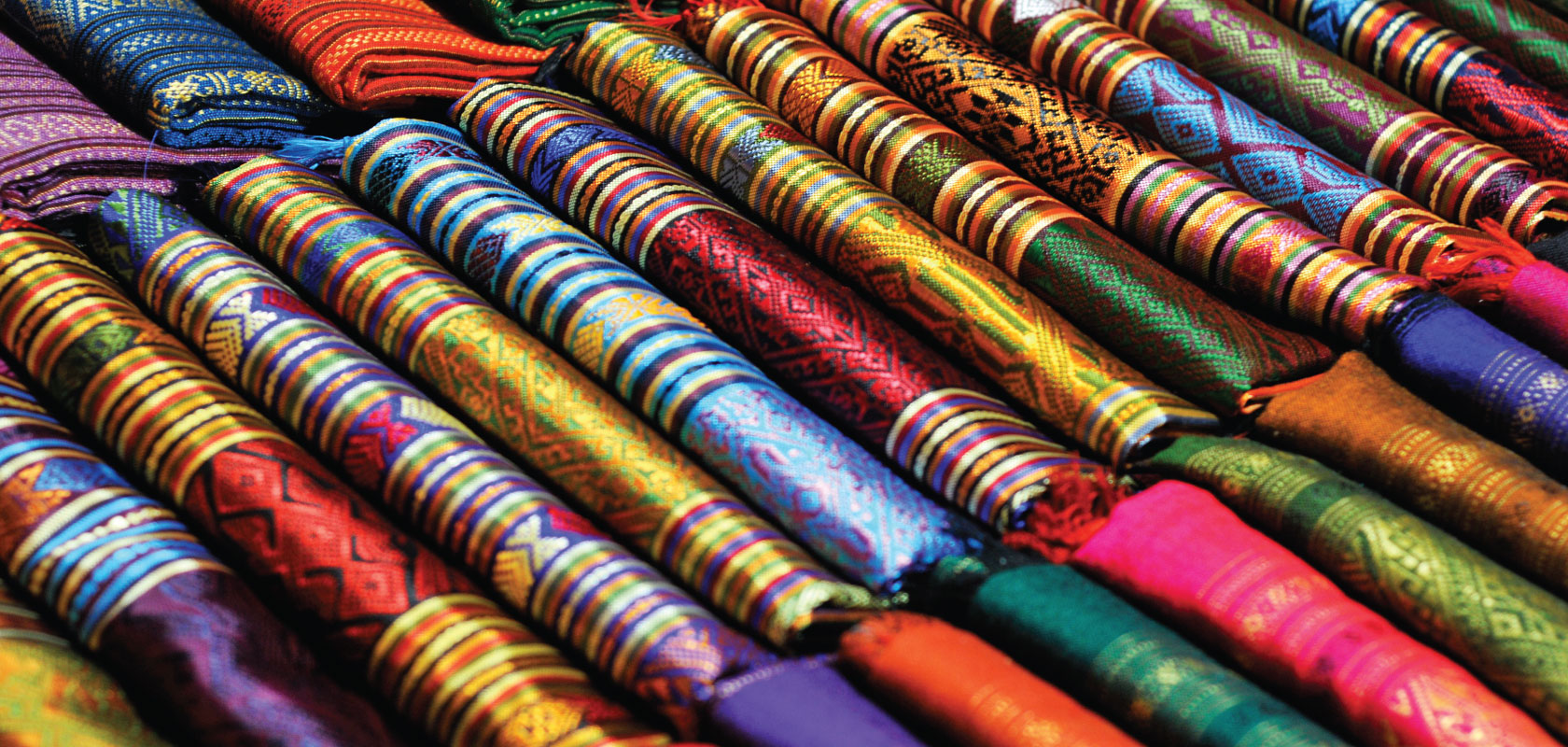
Often linked with the royalty and used in East Asian clothing. Unlike other natural fibers, it is made from an animal, the silkworm, spinning its cocoon. A luxurious fabric praised for smoothness and shyness. It is an extremely strong material, yet it is lightweight.
The high dye-absorption properties of silk make the fabric get saturated and vivid colors easily.
Hemp
Is the new cool kid in the natural fabrics. Hemp grows quickly, requires little water, and few pesticides compared to cotton. Hemp fabric is reported to be nearly twice as strong as cotton fabric and is highly resistant to wear and tear over time. It has much longer fiber length, which contributes to having this strength.
Leather
Traditionally not categorized as fabric. Leather can be made from the skin of different animals.
Recent years, the vegan leather got popularized. It is one of the ultimate greenwashings, a way to sell plastic with leather price.
More about tanning in the color section of the blog tanuki.
Fur
Really common to use in ancient times. Nowadays, it is a luxurious material to have in most of the world. The most common and cheap are the rabbits.
Waxed
G-1000 Barbour
Sashiko
Sashiko (刺し子, meaning “little stabs”) is a traditional Japanese thick fabric, also used for judo uniforms. It has become globally recognized and popular, especially among denim enthusiasts. Traditionally, Sashiko is done on indigo-dyed cotton or hemp fabric with contrasting white cotton thread. The technique involves a simple running stitch in repetitive patterns, often inspired by natural motifs such as waves, mountains, bamboo, and interlocking shapes.
2. Polymers
Polymers are what is commonly known as synthetics.
Acrylic
Polyester
Nylon
POLYURETHANE
3. Fabric
Mix
There are many reasons to mix different materials, for example, adding elastane to the cotton to make a pair of jeans more elastic, adding some synthetics to make a cotton or wool shirt more durable. From a negative perspective, it is a way companies cut corners on the cost, and it can lead to:
- G1000
Gore-Tex
Westex Indura
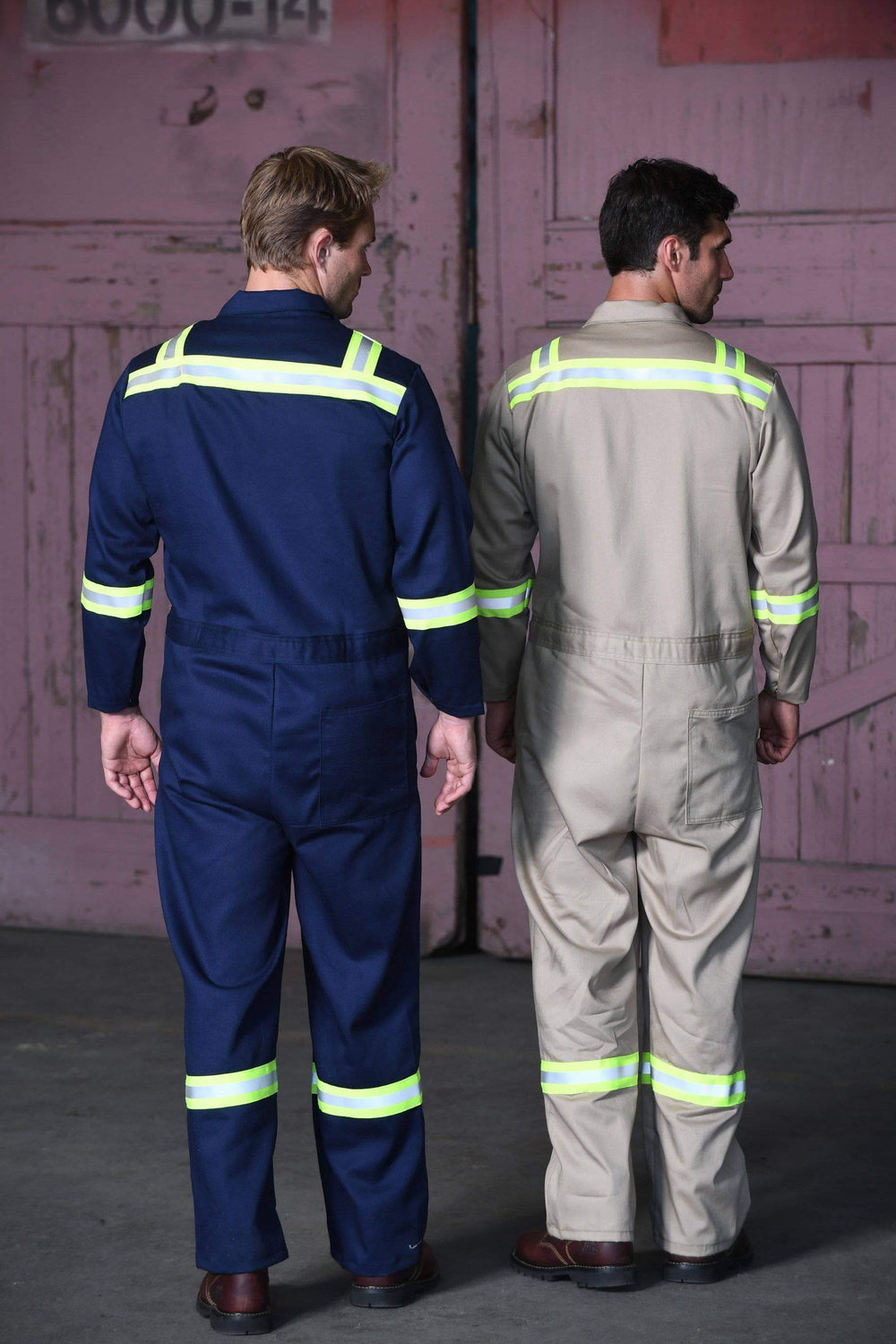
Westex Indura is an artificial flame-resistant material used in professional clothing.
Thermaloft
Cordura
Recycled
Recycled fabric can be synthetic like RPET, or recycled cotton and wool. Usually, it uses less energy, water, and other resources. The cons are that nowadays it is still more expensive to produce, and we may end up with weaker fabrics because of variable source materials, the degradation of the fibres with each recycle, and less uniform texture and strength in the material.
Construction
Ringspun Cotton
Sashiko
Denim
There are some variations of denim, like the Bull Denim, which is a heavyweight, durable cotton fabric characterised by its thick, coarse yarns and a distinct twill weave pattern, typically a 3/1 or 4/1 twill.
References
Some references and nice-to-read blogs and journals.
- Asket — Illustrated blogs of a label that take iconic jacket styles and re-make them using the best materials that we can find.
- Flâneurs — A journal from a French shop.
- The Denim Hound
- The Iron Snail — YouTube channel about clothing
- Paynter
- My Life Outdoors
- MEN’s FOLIO — Samurai Jeans Founder Toru Nogami Talks About Japanese Denim, the Denim D’Artisan Collaboration and More
- Vestir Bien — Spanish YouTube channel that talks about the quality of clothing
- James Leung — YouTube channel about clothing
- Tanner Leatherstein — Youtube channel about leather.
- Rose Anvil — Youtube channel that cut shoes and review their constructions and quality.