Tanuki
Dyeing techniques and construction methods in the clothing industry
- 23 Nov 2025
- ⌘
- 5 min read
Table Contents
- 1. Colors
- Yarn Dye
- Pigment Dye
- Garment Dye
- Shibori
- Block Print
- Ikat
- Leather Tan
- Brands
- Tanuki
- Samurai Jeans
- Momotaro
- Foxfibre®
- 2. Certifications
- bluesign®
- Organic
- OEKO-TEX
- RWS yarn
- Woolmark
- 2. Weight
- 3. Weaving
- Yarn Count
- Gauge
- Machines
- Left Hand Twill
- Ripstop grid
- 4. Details
- Stitching
- Tapered Cut
- Parts
- Selvedge
- 5. Treatments
- Ozone Treatment
- Anti-skewing
- Sanforization
- Singeing
- Wash
- Fades
- Whiskers
- Honeycombs
- Thigh fades
- Stacks
- Train tracks
- Country of Origin
[ Blog Under Construction … ]
This is blog with FABRIC and LABEL are part of the trilogy of my textile notes.
This part is more focusing on materials, quality, dyeing, and construction methods. Leaning towards brands that take quality as a top priority, instead of the brands that like to show off their logo. We are going to read and discover merino wool, selvedge denim, and more niche materials like Supima® Cotton, Foxfibre®, and Westex Indura. Do you want to know about undyed and unbleached clothing and natural dyes like the purple-blue indigo or why GSM matters?
1. Colors
In the past, all dyes were from natural resources like plants such as turmeric, saffron, indigo, or some minerals.
One of the most expensive was the Tyrian purple, also known as royal purple, which was worth more than gold. The purple was extracted from murex, a sea snail, which 10,000 of them were needed to make only one gram of the dye. And that is why there weren’t purple flags before the XX century, in which purple was synthesized.

One of the most famous natural dyes that remains to this day is Indigo […]
Most of the clothes on the market are either dyed or bleached. In contrast to the modern synthetic dyes that fill modern humans’ wardrobes, there are still some natural dyes that remain to this day.
Another way to dye can be using sulfur, which, for example, pure blue Japan has in its Work Shorts
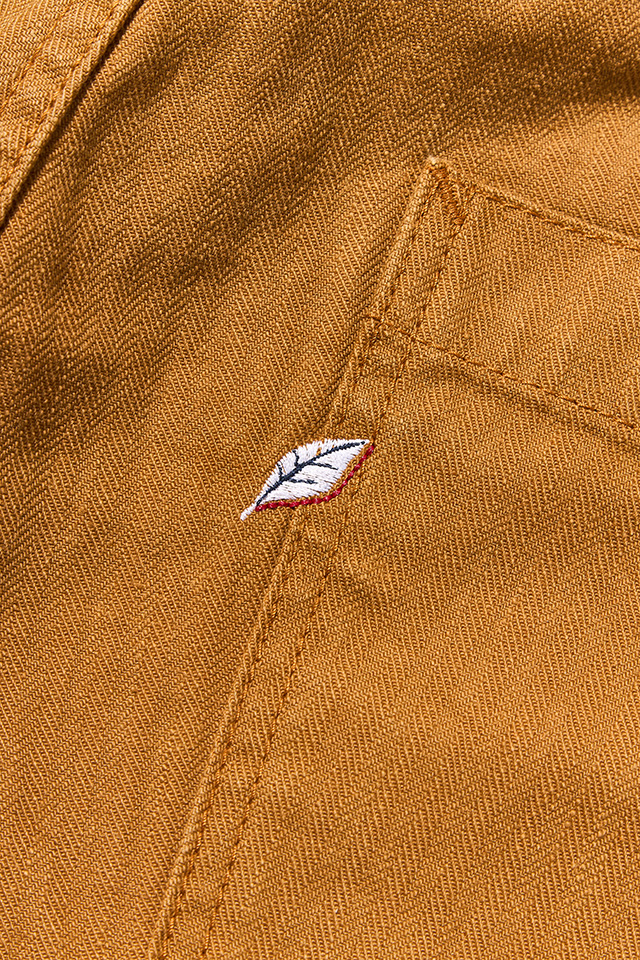
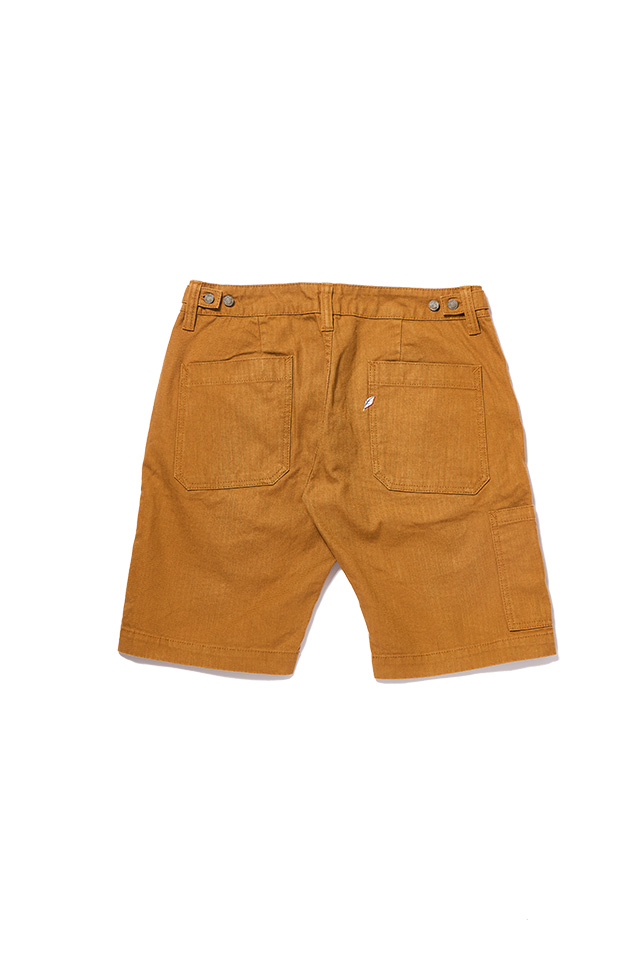
Sulfur Dyed Herringbone Work Shorts from pure blue japan
Yarn Dye
Yarn dyeing colors individual yarns before weaving or knitting into fabric. This method is more expensive and time-intensive, often used in premium fabrics.
Pigment Dye
Is a process where insoluble pigment particles are applied to the surface of a fabric or garment rather than penetrating the fibers like traditional dyes. Usually, the fabric is pre-treated before applying the pigments. A chemical binder is used to “glue” the pigments.
Garment Dye
Usually, the dye is done before the garment is sewn, but with garment dye, the dyeing occurs after the garment is finished or almost finished (for example, maybe the labels haven’t been sewn yet). Garment dyeing is often used to achieve rich, deep colors and unique washed or vintage looks.
Shibori
Is a traditional dyeing technique originated in Japan in the 8th centuries made for the upper class and for samurai garments. That involves folding, stitching, or binding fabric before dyeing it. By doing this, it creates patterns on fabric because some parts will be undyed.
Block Print
A hand-printing technique using carved blocks. Nowadays, usually done in Asian countries or countries with cheap labor because of the work-intensive process. Need different blocks for each of the colors, so if it needs four colors, it will need four times the time. On each apply, also need time for the previous dye to dry.
Ikat
is a traditional textile dyeing technique where the yarns are resist-dyed before they are woven into fabric. This method is labor-intensive and not common, and it is unique because the pattern emerges from the dyed threads themselves instead of being printed, dyed, or embroidered later on the fabric. It is more common in Asian countries like India and South America.
Leather Tan
[…]
Vegetable-tanned leather is a type of leather made by tanning animal hides using natural tannins extracted from plant materials such as tree bark, leaves, and fruits. This traditional tanning process, used for thousands of years, involves soaking the hides in water or saltwater solutions containing these vegetable tannins. The tannins cause the hides to transform into leather that is durable, flexible, and resistant to water and bacteria. Unlike chrome-tanned leather, vegetable-tanned leather is not treated with synthetic chemicals and has a natural, rich color that deepens over time, developing a unique patina and a sweet woody fragrance.
Brands
Tanuki
Tanuki has many experimental dyeing techniques, adding hues and undertones to their denim, using natural dyes like cobalt for blues and sumi ink, a traditional type of black ink made primarily from soot and animal glue.
Another unusual dye technique is Kakishibu dyeing, used in their Kakishibu Selvedge Jeans. According to Naked and Famous: “Kakishibu is made by fermenting the juice of unripe, astringent persimmons (dai-dai). The tannins from the fruit oxidize over time, producing a dye that ranges in tone from golden orange to deep brown.”
15oz SOGA Selvedge is a pair of jeans that use SOGA fabric, which is dyed with a botanical fusion of saffron and turmeric, which produces orange undertones, creating the blue jeans with a yellowish tint. Tanuki also has clothing using botanical dyes like Mud Dyed Brown and Yamamomo (Bayberry) Dyed Green) )
Samurai Jeans
Another brand that likes to use interesting dyes is Samurai Jeans, which uses natural dyes from the black beans and chestnuts that are produced in the Sasayama area, which is where their Japanese cotton comes from.


t-shirts dyed with black beans and chestnuts
Momotaro
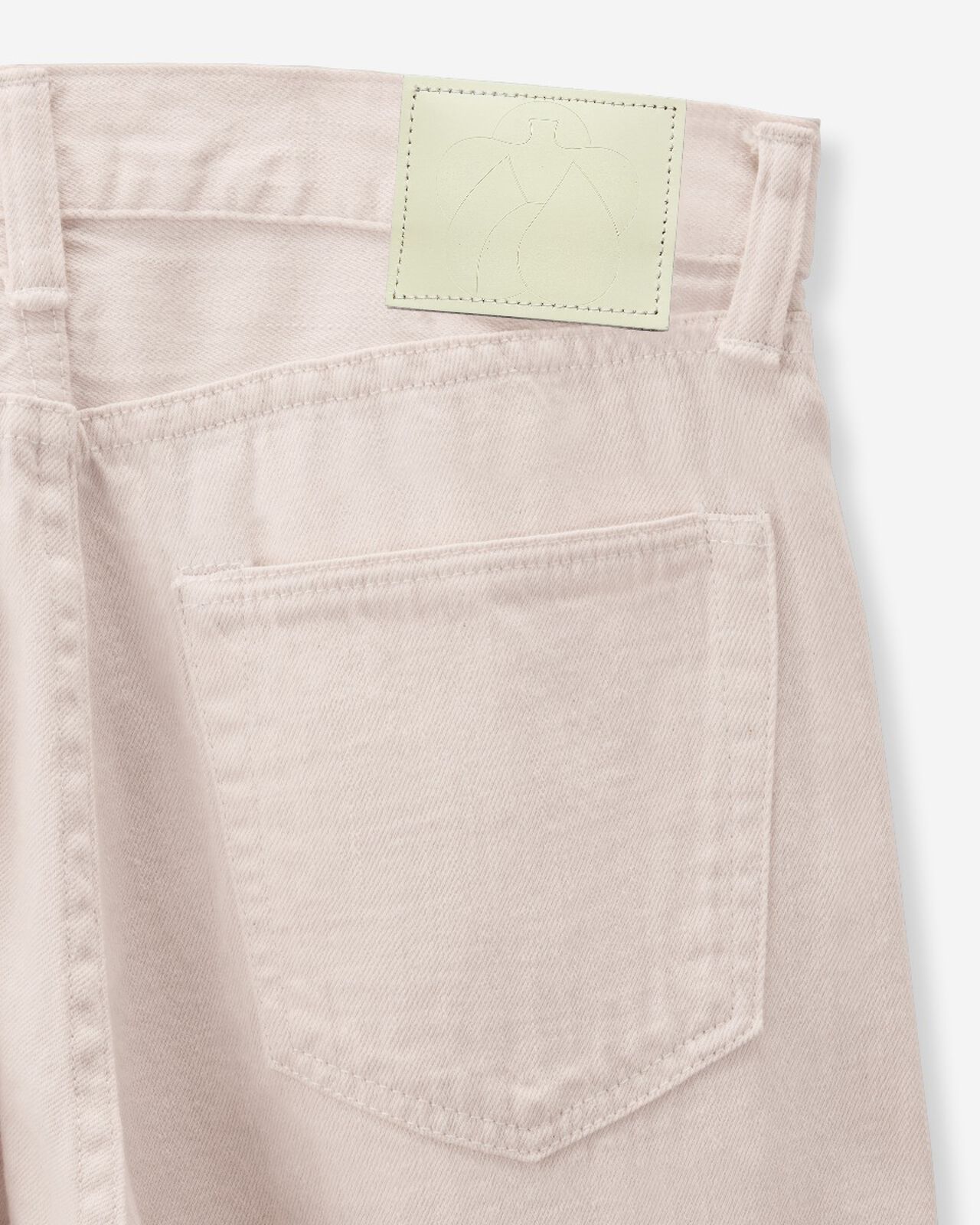
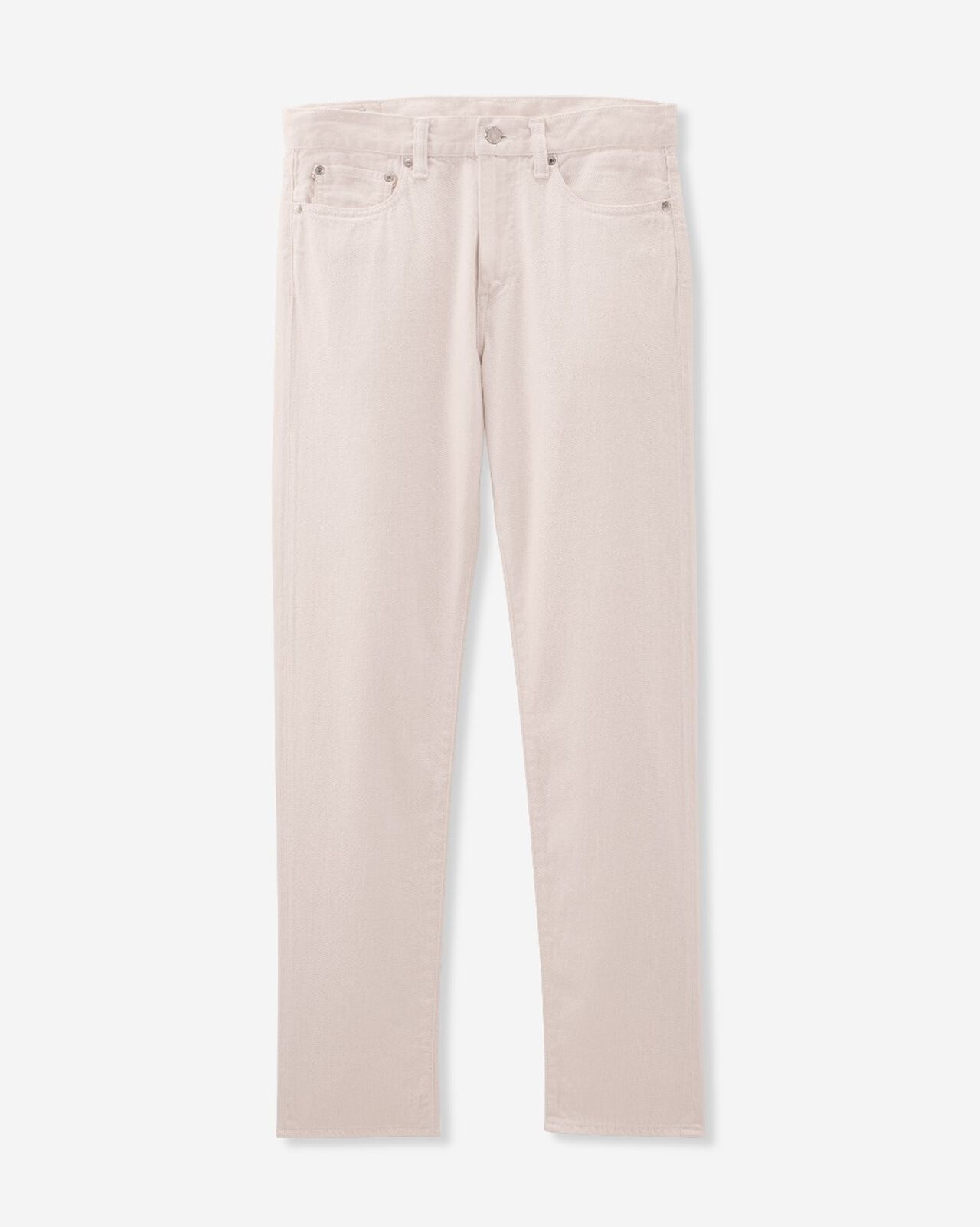
The Momotaro has a line of sakura dyed clothing, including jeans, S/S Shirt and S/S T-Shirt, which it has cherry blossom-dyed threads for the warp.
Foxfibre®
Even cotton that already have color, like Foxfibre® which […]
Naked and Famous have jeans made from this fabric called Brown Fox
2. Certifications
bluesign®
bluesign® APPROVED Fabrics
Organic

There is an organic trend, mainly with cotton in recent years, mainly on some European brands, which is supposed to be grown without synthetic pesticides, fertilisers, or genetically modified seeds, hence a more eco-conscious cotton that not only is better for the environment but also for the people that work on the cotton. It can also be beneficial for people that have allergies to some chemicals. Some cons may be the higher costs, the higher requirement of water, and some possible fake organic cotton on the market.
OEKO-TEX
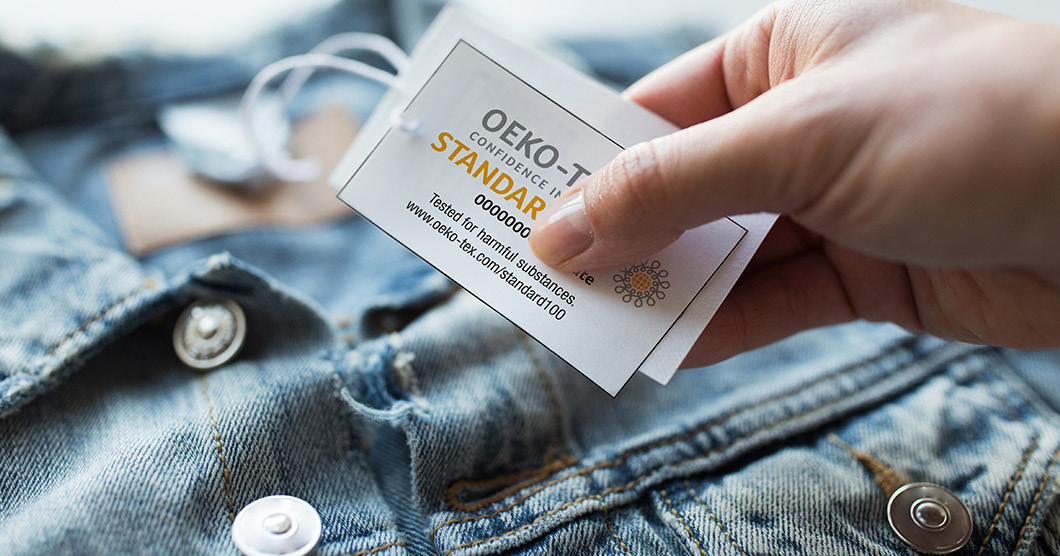
Founded in 1992 and working with more than 35,000 companies. It is a certification system for textiles and leather products that ensures they are free from harmful substances and safe for human use.
It has certifications like MADE IN GREEN, STANDARD 100, LEATHER STANDARD, etc.
RWS yarn
Wool from sheep raised humanely (mulesing prohibited), sustainably managed pastures, guaranteed traceability from sheep to finished product.
Woolmark
Woolmark certified yarn. Superior quality, traceable and sustainable wool for comfortable and responsible products.
2. Weight
Weight is often seen as one of the first quality measurements when you grab a garment. Although it is not that desirable for clothing meant to be used in hot weather, some materials don’t need that much weight to maintain their quality, for example, some synthetics, hem, and wool. If you prefer to wear clothes in the onion way—layering thin layers of clothes on top—you will skip thick garments.
For easy comparison when choosing a T-shirt, using Grams per Square Meter (GSM) is much more usable, especially with online shopping. You can also see if a brand takes care of their products when they list GSM on their site.
- GSM (Grams per Square Meter): It measures the weight of the fabric per unit area, reflecting the fabric’s density and heaviness. A typical T-shirt fabric usually falls between 150 to 200 GSM; more than 180 GSM is usually considered heavyweight.
- OZ (Ounces per Square Yard): Commonly used in the United States. One ounce of fabric weighs approximately 28 grams. It is really common to use it on jeans, where 10oz to 14oz are the standard.
- Yarn Count: Less common to use, it is the thickness/fineness of the yarn used in fabric production. Higher yarn counts mean finer, thinner yarns, resulting in lighter, softer fabric.
Depending on knit style and density, count 8 yarn can contribute to T-shirts that are in the medium to heavyweight category, usually 150-220 GSM (grams per square meter) or more, providing durability while still being breathable.
3. Weaving
Yarn Count
Yarn count number means how thick the yarn is. For daily wear 20-50 are usual. Usually 50 or more suits finer fabrics for tess. 30 is standard, balanced strenght and softness. And lower yarn count like 10-20 are used on heavy denim.
Gauge
Is the fabric tighness. It’s stitches/rows per inch on a swatch with specific needles. Gauge around 16-24 stitches per 4 inches is standard for medium-weight knits on typical needles (4.5-5.5mm), producing drapey yet structured fabric for clothes.
Machines
-
Hand Loom: Hand looms are the oldest type of loom and are rarely used nowadays.
-
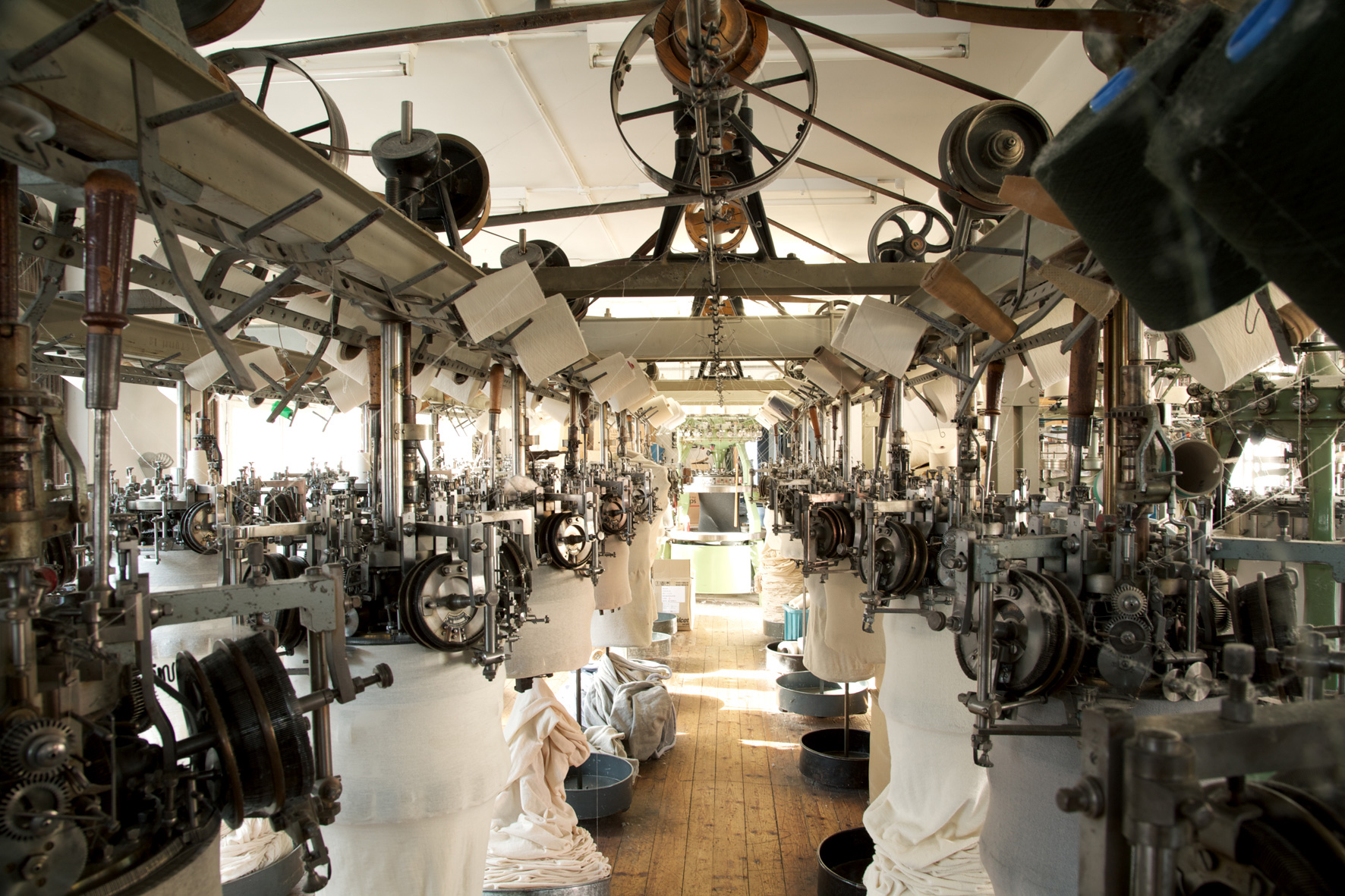
Tubular Knit Machine: These are more modern circular knitting machines. Tubular knits are more economical and practical for high-volume production compared to loopwheel knits, due to faster production of fabric.
-
Loopwheel Machines: Loopwheel weaving is done on circular knitting machines that stack a layer after a layer of cotton in a big cylinder.
- Loopwheel weaving machines are considered vintage machines and can only do around 24 rotations per minute, which is translated to one meter of fabric per hour. The slow speed avoids tension on the cotton threads, ending with a smoother, softer, and denser fabric compared with a regular fabric.
- Loopwheel Machines were popular in the early to mid-20th century, but currently, only a few remain in Japan and Germany. Nowadays, loopwheel knitting is considered slow, suitable for limited production runs, making garments expensive.
- One of the heaviest loopwheeled fabrics is the [2S14] from Merz b. with a GSM of 380.
-
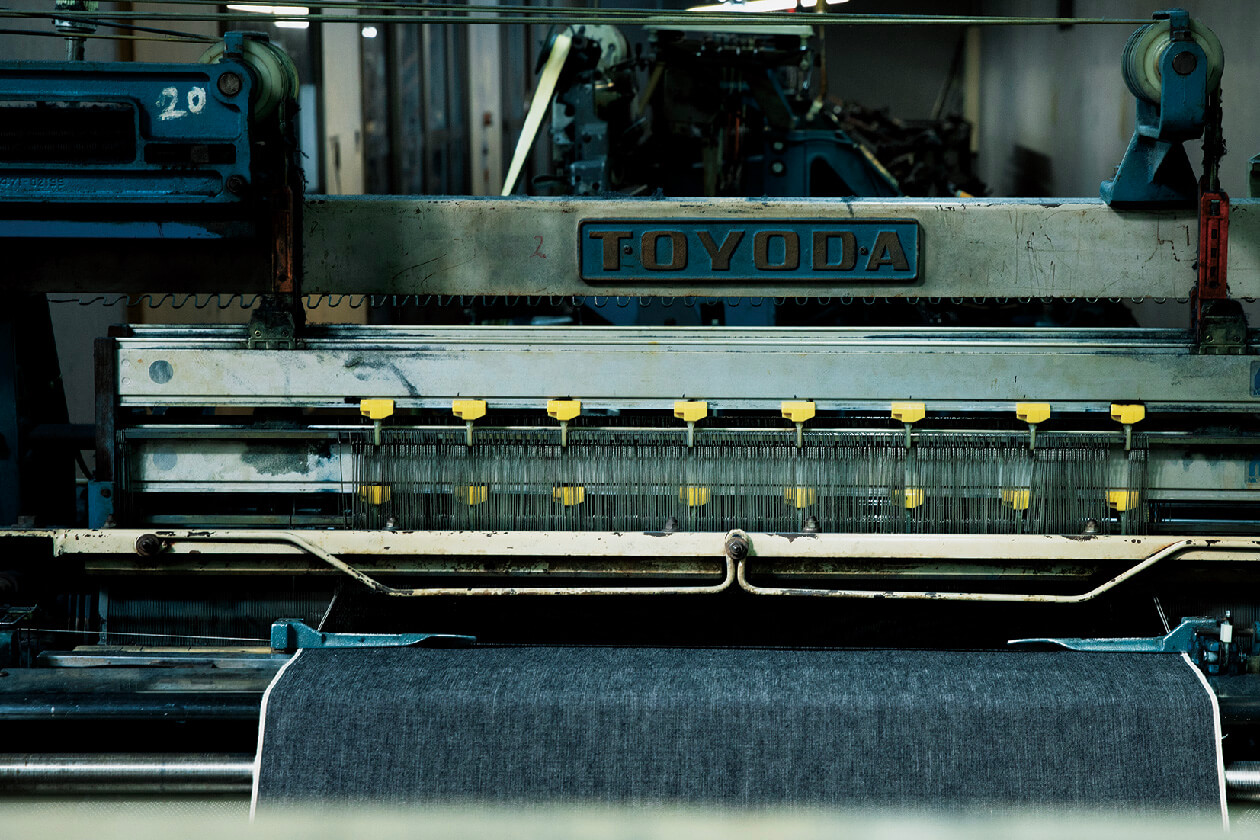
Toyoda Loom Machines: Although most people talk about how the Japanese bought second-hand machines from the US, in fact, Japanese jeans are mostly made on Japanese looms, and one of the most popular choices is the Toyoda brand. In the late 19th century, Sakichi invented the first mechanical loom in Japan; later, he founded Toyoda Spinning & Weaving Company. In 1924, he started building automated looms. In 1937, with the earnings of the sale of the automated loom, Sakichi’s son founded Toyota Motor Corporation, which became one of the world’s biggest car manufacturers still to this day.
Left Hand Twill
Also known as LHT or S-twill, it is a style of textile weaving where the diagonal lines of the twill pattern run from the upper left corner to the lower right corner of the fabric. LHT weaves tend to develop a softer texture after several wears and washes.
A twill fabric can be recognized by those diagonal patterns. […]
Ripstop grid
The ripstop grid increases tear resistance and gives a textural hand feel. Often found on synthetic materials and used on technical or high-quality bags, like the Crumpler Entity.
4. Details
Stitching
- Chainstitched
Tapered Cut
A style that is relaxed in the waist and thigh but gradually narrows to a slimmer opening at the ankle.
Parts
- Collar: Trucker collar. Round collar is a smooth circular neckline. V-neck is a neckline that dips down more than a usual neckline, which can provide a more stylish touch to the garment. Crewneck is a round neckline that fits closely to the neck.
- Armpit: Some t-shirts have triangular inserts under the arm, found in Merz b. 215 T-shirt.
Selvedge
According to Naked & Famous, “historically, mills identified fabrics for different customers by using coloured lines in the selvedge, most famously red. Today, the selvedge ID is also a creative detail. At Naked & Famous Denim, we’ve played with green, orange, pink, glow-in-the-dark, rainbow, and yes—a few with curse words woven right into the edge.”
5. Treatments
Ozone Treatment
As opposed to what you think, the ozone treatment is an eco-friendly process. Using ozone gas (O3) to clean, fade, or finish textiles without water or harsh chemicals.
Anti-skewing
Denim twill naturally contains torque—an angular tension built into the weave—that can cause the legs to twist after washing. Anti-skewing offsets this by rotating the fabric slightly in the opposite direction during finishing.
Sanforization
Sanforization is a mechanical pre-shrink process invented in the 1930s by Sanford L. Cluett. In this treatment, the fabric is moistened, stretched, and then compressed against a heated rubber belt and cylinder to stabilise it. The process ensures that most shrinkage happens before sewing. Sanforised raw denim keeps its raw, unwashed character but will shrink only about 1–3% after the first wash, while unsanforised (loom-state) denim can shrink up to 10% and usually requires a hot soak before wear.
Singeing
After weaving, denim often retains small, fuzzy fibres that stick out from the yarn surface. Singeing is a finishing step where the fabric is passed quickly over an open flame, heated copper plates, or gas burners to burn away these protruding fibres without damaging the cloth. This process leaves the fabric cleaner, with sharper twill definition and deeper colour, ensuring that the unique yarn structure and dye qualities take centre stage rather than being obscured by lint or fuzz.
Wash
Prewashed: Usually used to pre-shrink the garment, so the size will not shrink as much as it would if it weren’t washed. Usually one wash, but can also be washed multiple times.
Stone Wash started by […], usually with jeans […]
Fades
Whiskers
Honeycombs
Thigh fades
Stacks
Train tracks
Country of Origin
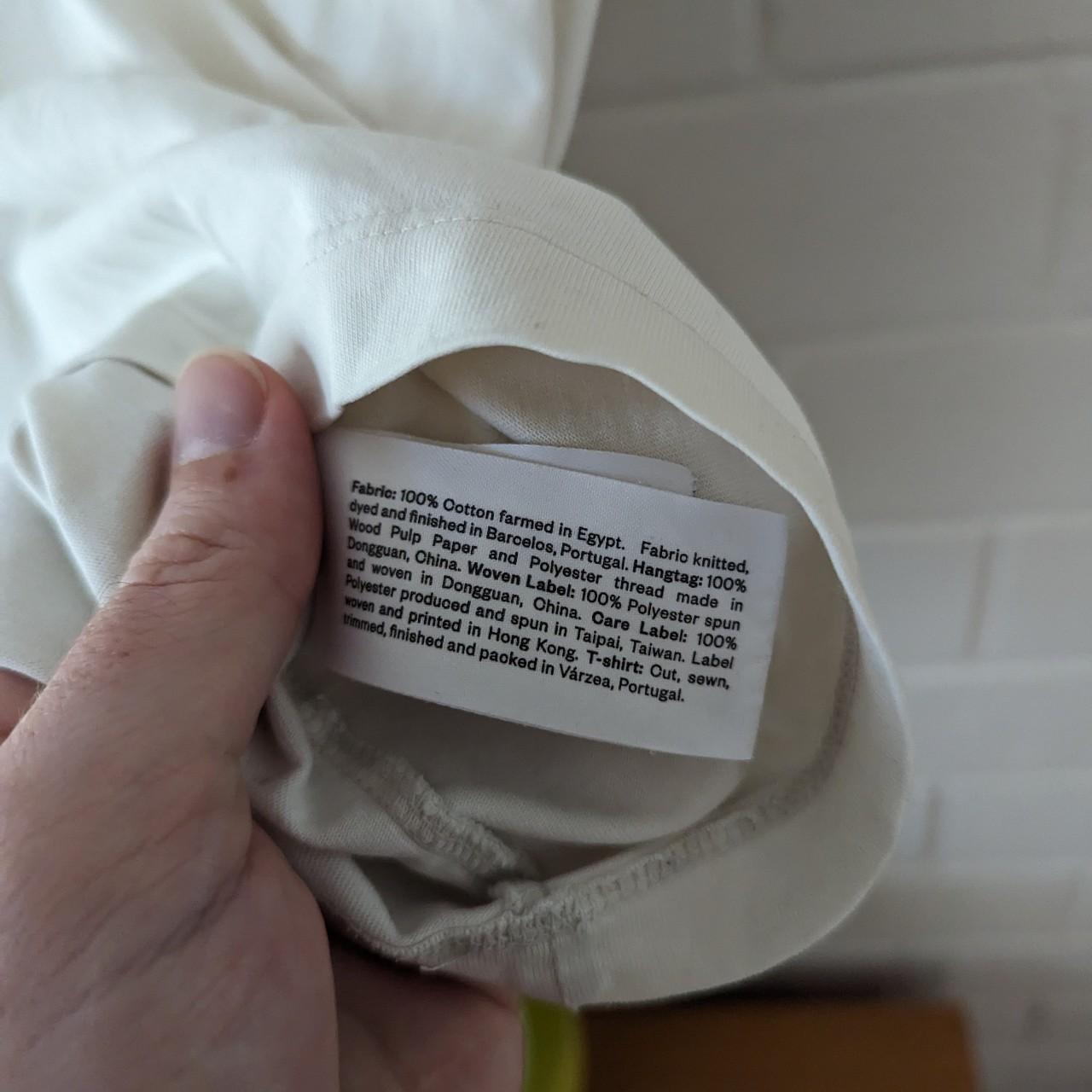
an Asket transparent traceable label
As you can discover on transparent brands like Asket, there is almost impossible that all the production and sources come from the same country, so it is not fair to say this cloth is made in X country. You have the country where the fabric came from, where the labels come from, where the yarn, cotton, is sewn, trimmed, finished, and also where their designers and the company come from.
The other two blogs about the clothing trilogy can be found in fabric and labels.